- Carrito vacío
- Volver a la Tienda



By doing so, the effect of an adjusting entry is eliminated when viewed over two accounting periods. If adjusting entries are not prepared, some income, expense, asset, and liability accounts may not reflect their true values when reported in the financial statements. Deferrals involve revenues and expenses that have been paid or received in advance and recorded but have yet https://nudem.org/cla-carlsbad-cla-cliftonlarsonallen/ to be earned or used.
Prepaid insurance
- Most adjusted journal entries are made following the preparation of the unadjusted trial balance and precede the creation of the adjusted trial balance.
- However, managing complex accounting tasks like adjusting entries can stretch your capacity, often requiring more time and focus than you might realistically have available.
- The first step is to review your original journal entries and identify any errors or omissions that need correction.
- Reclassifications involve moving amounts between accounts, while estimates involve adjusting amounts based on expected future events.
- Real examples include recording earned but unpaid interest, unpaid wages, rent paid in advance, advance payments for services, and spreading the cost of equipment over its life.
- The reason for this disparity is that the external auditors require a higher degree of precision in the year-end financial statements that they are examining, and this calls for more adjusting entries.
A fiscal year is a twelve-month reporting cycle that can begin in any month and records financial data for that consecutive twelve-month period. For example, a business may choose its fiscal year to begin on April 1, 2019, and end on March 31, 2020. This can be common practice for corporations and may best reflect the operational flow of revenues and expenses for a particular business. In addition to annual reporting, companies often need or choose to report financial statement information in interim periods. Before reviewing the detailed scenarios below, it’s helpful to understand that examples of adjusting entries typically address timing differences, corrections, or updates discovered during the adjusting entries examples period close.
- They are critical not only for meeting regulations but also for showing a company’s true financial status to those invested in its success.
- It connects the dots between cash transactions and the accrual accounting method.
- A liability to pay it arises, hence the recording of a payable at the end of the period.
- Thus, adjusting entries are created at the end of a reporting period, such as at the end of a month, quarter, or year.
- He is known for his pragmatic approach to fiscal policy and governance.
Analyst Reports
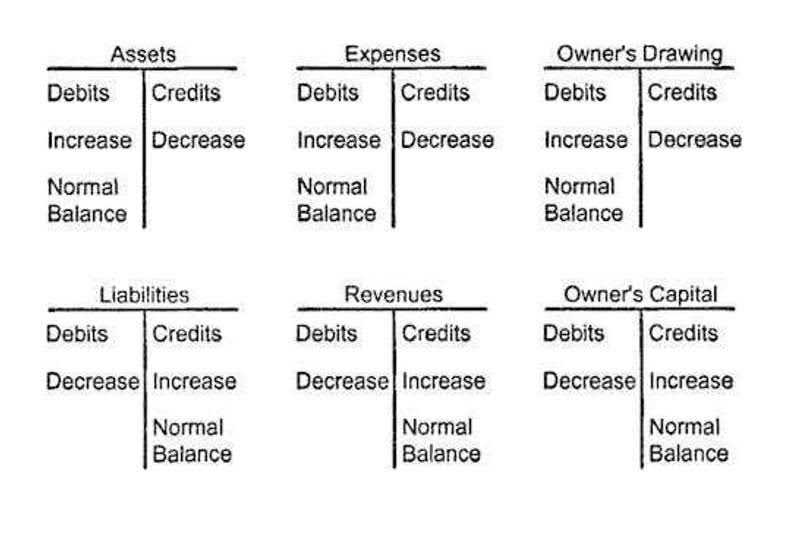
Adjusting Entries are special journal entries that adjust the amounts of certain ledger accounts to accurately report income and expenses during the period. Preparing adjusting entries and the adjusted trial balance are the fifth and sixth steps in the accounting cycle of the business. The Accounting Cycle refers to the steps that a company takes to prepare financial statements. To assist you in understanding adjusting journal entries, double entry, and debits and credits, each example of an adjusting entry will be illustrated with a T-account. Since adjusting entries so frequently involve accruals and deferrals, it is customary to set up these entries as reversing entries. This means that the computer system automatically creates an exactly opposite journal entry at the beginning of the next accounting period.
- A company may choose its yearly reporting period to be based on a calendar or fiscal year.
- Adjusting entries may seem like a small part of accounting, but they have a significant impact on financial accuracy.
- This means that revenue is not recorded just because you have received a cash payment from your customer.
- They are used to reflect cash transactions that have already taken place but which need to be recognized in future accounting periods.
- These adjustments are a prerequisite step in the preparation of financial statements.
Accumulated Depreciation

This is reflected in an adjusting entry as a debit to the depreciation expense and equipment and credit accumulated depreciation by the same amount. Though the money hasn’t hit your account yet, you’ll still record that revenue in March to align with the accrual accounting principle. To do so, you’ll have to use an adjusting journal entry, debiting Accounts Receivable and crediting Accrued Revenue. To ensure accurate financial reporting, it is essential to match expenses incurred during the accounting period to the revenue earned. This involves allocating expenses to the appropriate expense accounts and closing these accounts to the permanent retained earnings account. Closing entries play a crucial role in the accounting process by transferring temporary account balances to permanent accounts.
Reversing entries are optional and not all types of adjusting entries may be reversed. Bookkeepers should consult financial policies and use their judgement to decide if and when to record reversing entries. Adjusting entries are often necessary recording transactions at the end of these periods to account for income and expenses that have not been fully processed. Suppose, a consulting firm provided services to a client for a service fee of $8000.

Financial Statement Preparation
Your bookkeeper will handle all the necessary adjustments and ensure they are correctly recorded in your financial records. If John acquires a patent for a unique product design for his store, amortization spreads the cost of this intangible asset over its useful life. Each period, John records a portion of the patent cost as an amortization expense. This helps match the expense with the revenue generated by the patent over time, ensuring accurate financial records. Each one of these entries adjusts income or expenses to match the current period usage.
